Robot Machine Player
Designed a robot platform to compete in a university competition for my Design and Manfacturing class.
Overview
For my sophomore engineering class in Design and Manufacturing, I led a team designing a Robot Machine Player (RMP) to complete a variety of challenges in a class-wide competition.
We worked through step by step of the design process from idea to manufactured RMP, and focused closely on why we chose certain design decisions over others.
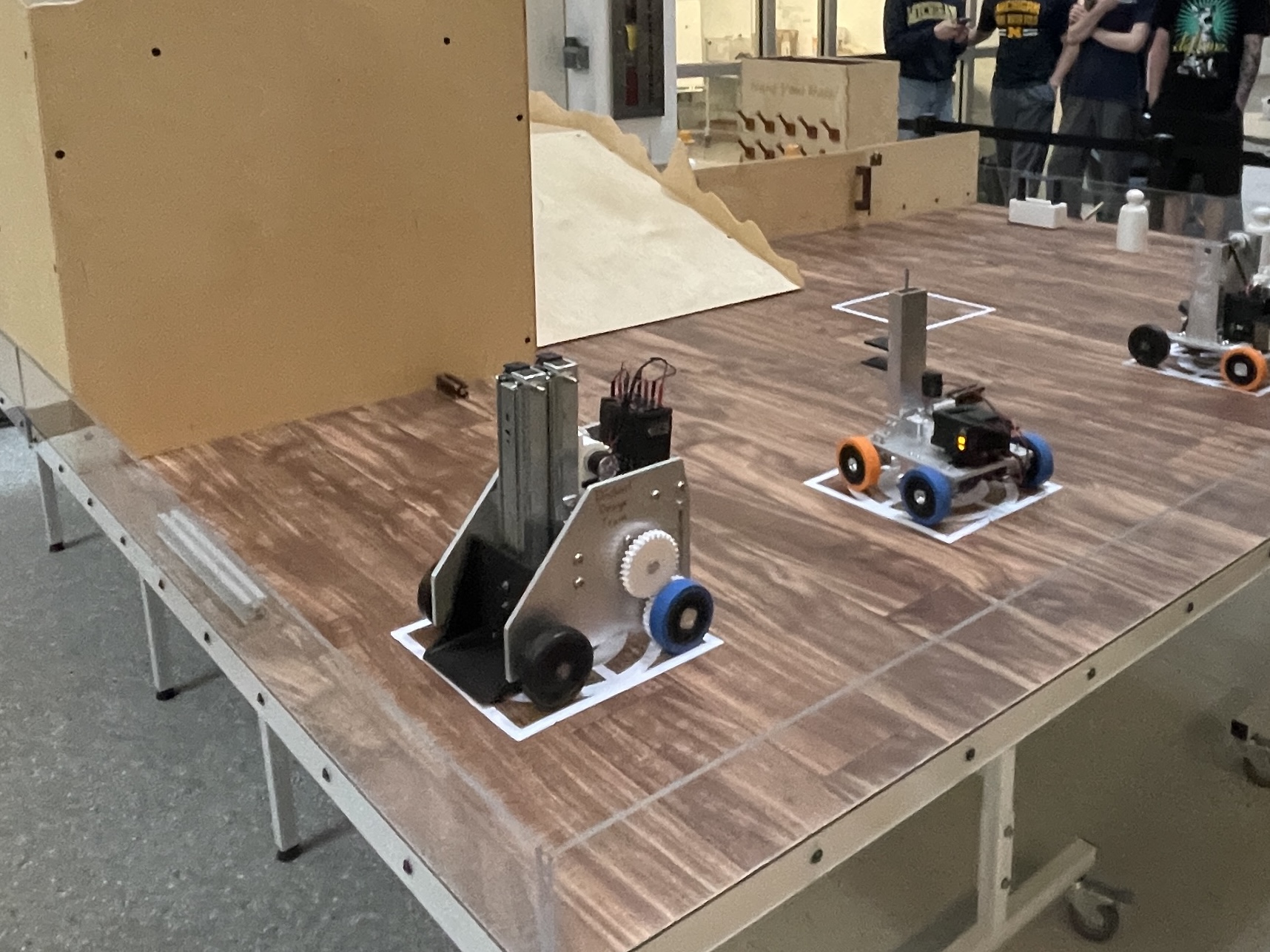
Strategy
The game challenges were first divided between the 4 groups within our section who all competed as a team. We aimed to divide tasks based on similarity, allowing each design to efficiently do their part in the larger challenge.
My team's tasks were to score game pieces from the ground into an elevated bucket, and to knock over pins placed throughout the field.
Design
There were several design constraints we had to consider for our RMP. The largest constraints were manufacturability, timeline, and budget, which was about $50 in addition to the provided materials.
We first brainstormed a dozen RMP designs, which we then compared with a Pugh Matrix. This helped show the strengths and weaknesses of different designs, and the design we decided to continue with ended up being a combination of multiple ideas.
We then took this concept and did a combination of physical prototyping and quantitative analysis to ensure that every part of our design would work in reality. This also helped us define specific specifications for our RMP, such as finding the required gear ratio for our drivetrain through a series of physical calculations.
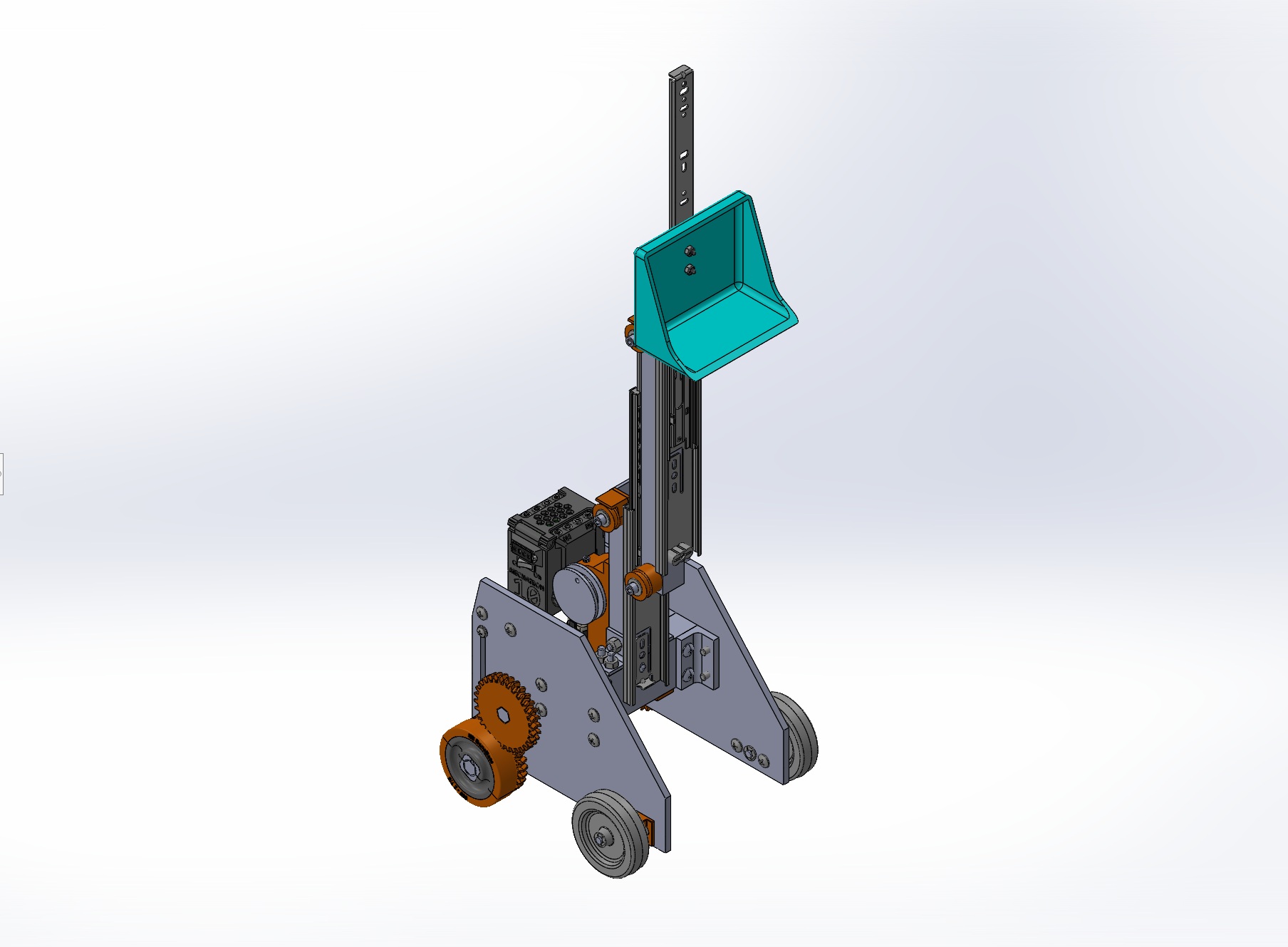
The RMP was then designed in Solidworks. By splitting the design into subsystems, we were able to divide the work among team members and easily bring them all into one master file when necessary.
Manufacturing
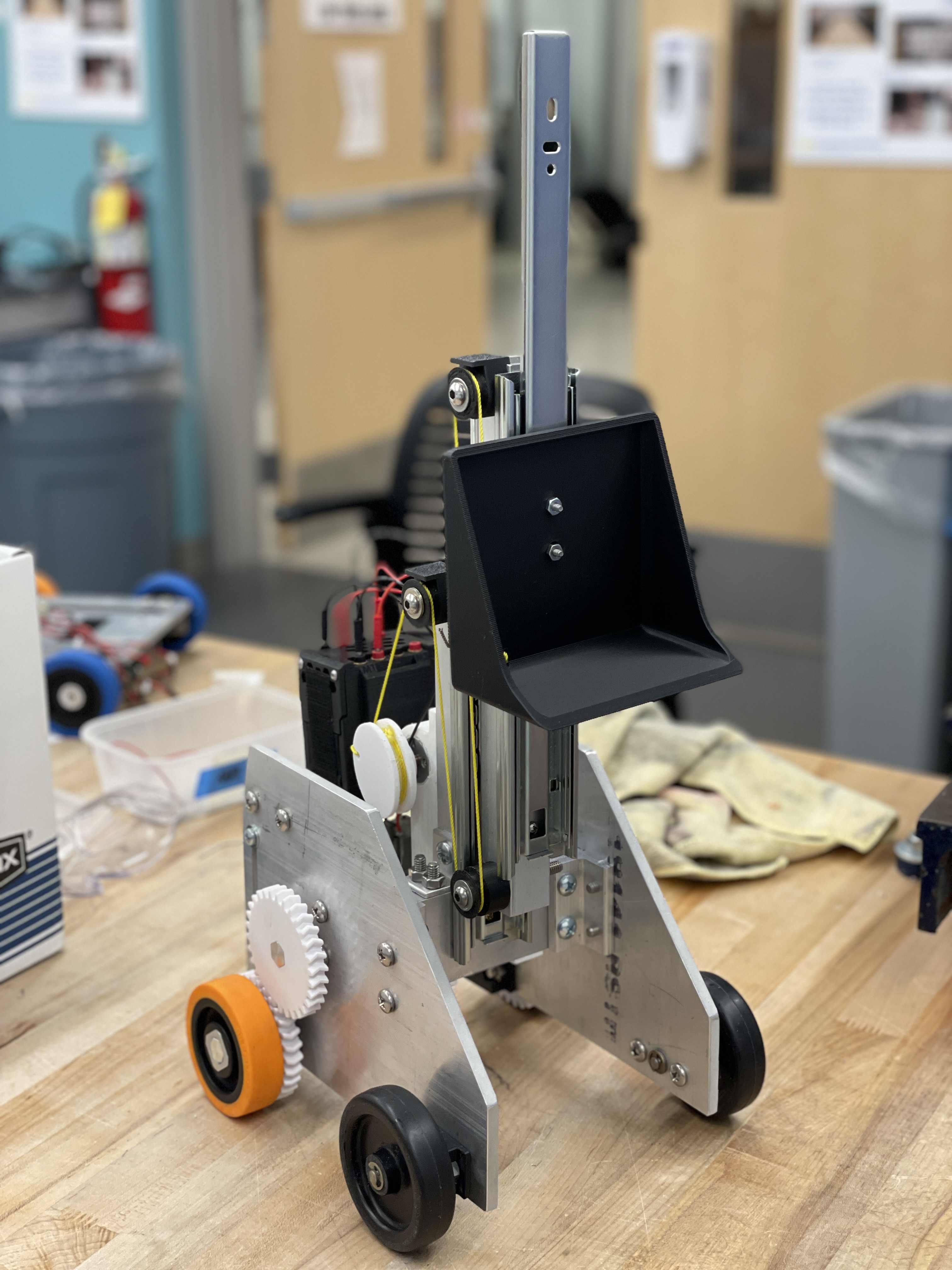
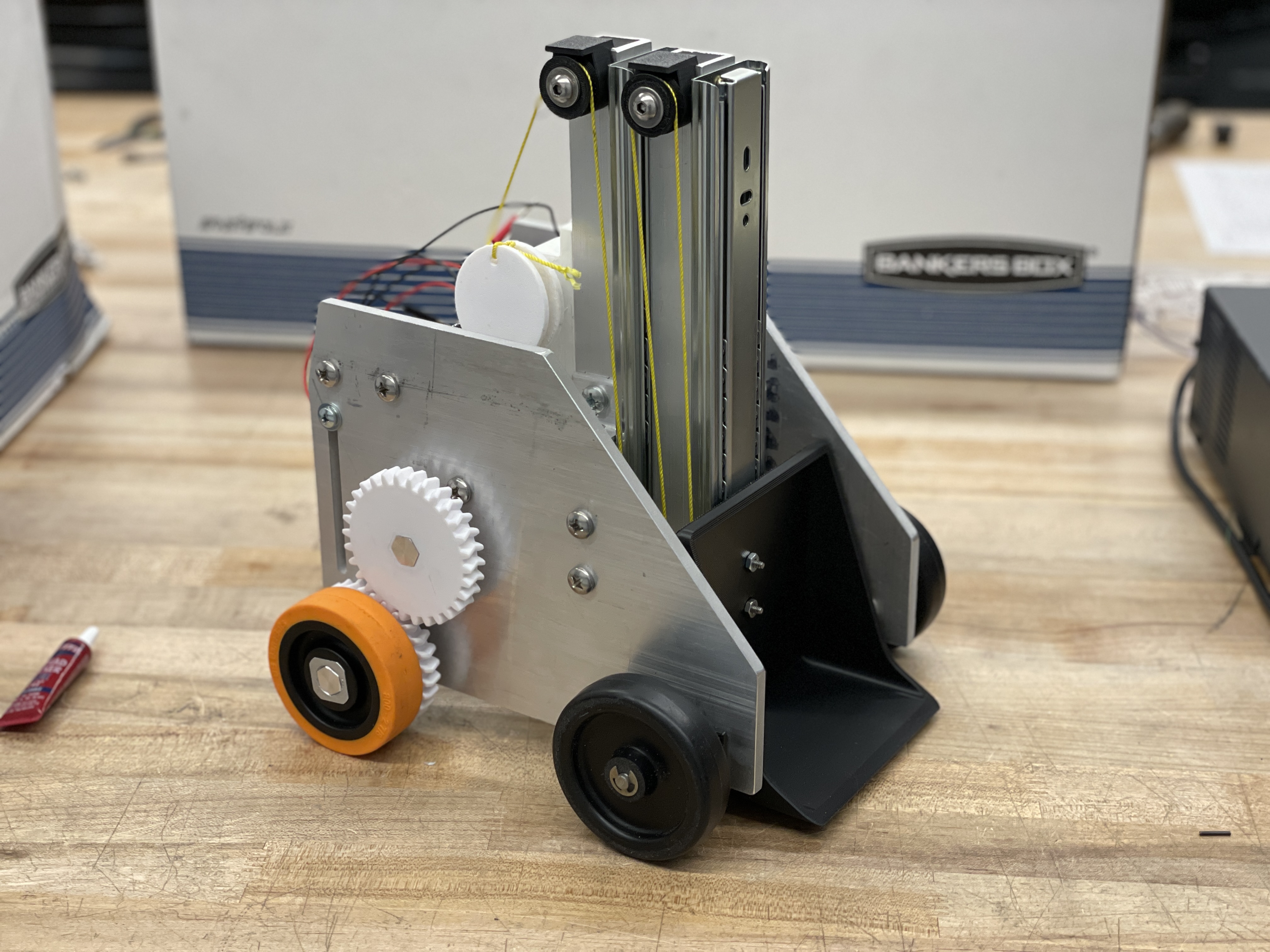
In my designed parts, I made sure to put manufacturability in the forefront to ensure all our parts could be made by successfully. Many of us had little experience using shop machinery, and we had a very tight timeline, so it was paramount that our design worked from the beginning.
We also included all fasteners within our CAD. This made assembly go very smoothly, as every part in the RMP was virtually assembled within Solidworks, allowing any conflicts to be solved before the final parts were made.
Lessons Learned
The main things I learned in this project were not the design and manufacturing. I already have had a lot of exposure to designing things and considering how systems interact from many of my projects in the past.
The biggest lesson I learned was how to work within a system. Most of my projects in the past have been self led, so I can jump around and do things exactly how I want to do them. This project required me to follow a stringent design process. I learned how to take my time to plan things out from the beginning and consider how that would affect things down the line.
By being methodical and intentional with all of our design decisions, it led to much more success than I would have expected for a first version of a design. Having a clear system also allowed us to work much better as a team, as everyone was on the same page with what was happening and why.