FIRST Robotics
Worked over several years to transition CAD from a tool the team used for one off parts to a critical part of our overall design workflow
Overview
As CAD/CAM Lead for the Dexter Dreadbot FRC team, I pushed throughout my years on the team to increase our capabilities using CAD software in our design process. When I joined the team as a freshman, we only used CAD for 3D‑printed parts such as brackets, mounts, or components that were too difficult to make by hand. When I was elected to lead the subteam in my sophomore year, my goal became to make CAD a critical step in the design process, aiding in the design of the robot as a whole.
Sophomore Year
The most prominent issue preventing us from fully utilizing CAD was our lack of experience with it. At the time, we had no dedicated CAD mentors, so my first priority was to spread competency among my teammates. I had a fair amount of experience using various parametric software in my personal projects, so I compiled what I’d learned into several workshops I could lead to share these skills with my peers.
Through these workshops, the team began to see how CAD could be used for different design processes, as well as how to approach more complex mechanical systems.
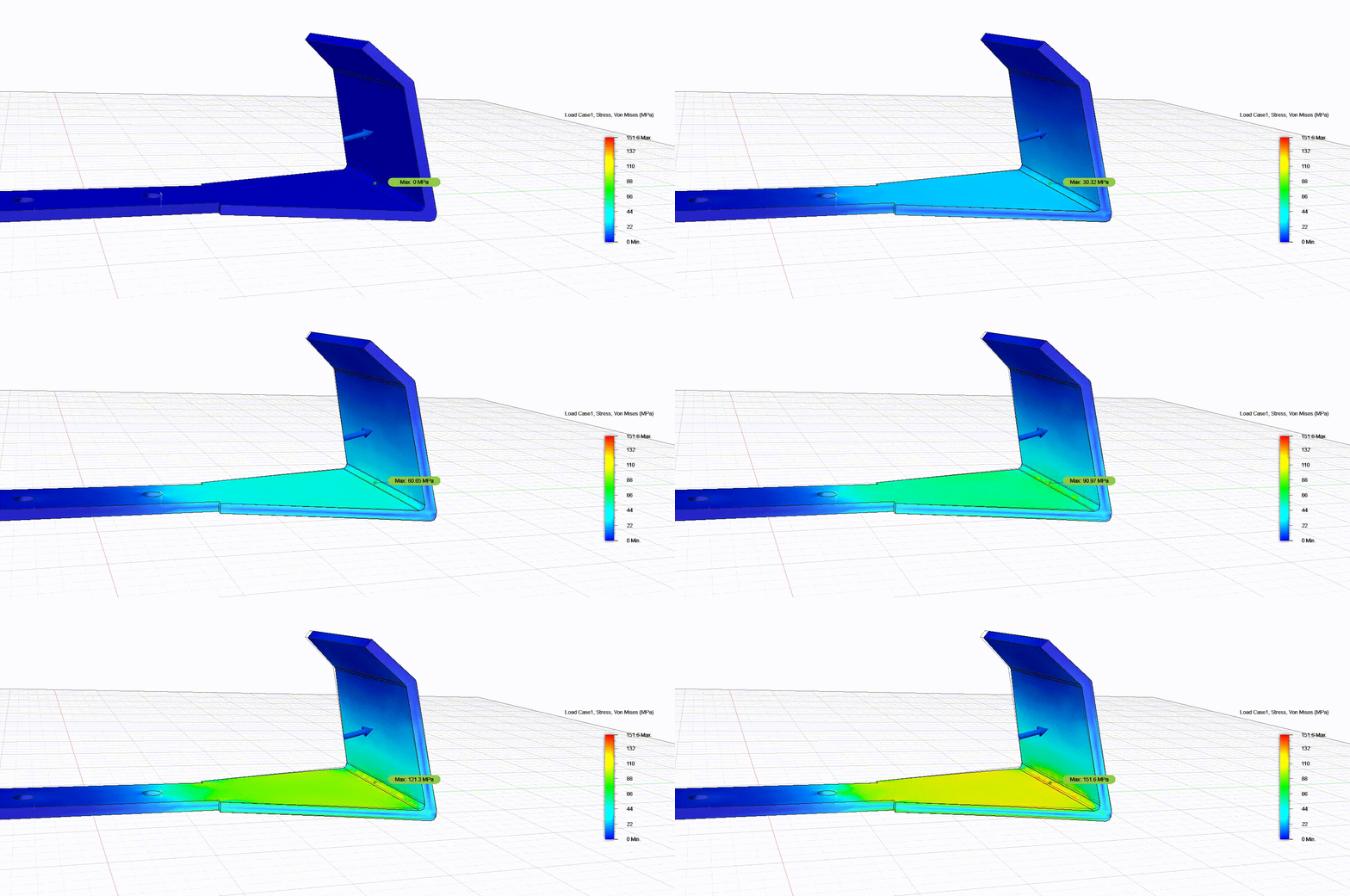
While the members of my subteam were quickly becoming more proficient with CAD, the rest of the team was still very used to going straight from physical prototypes to manufacturing final parts. However, during one of our competitions, a sheet‑metal hook that the robot hung from bent to the point of becoming dysfunctional. I took this opportunity to model the part and used finite element analysis to present an identical failure mode to the original. I shared these findings with the team, making the point that by integrating CAD into our overall design process, we could identify these failures earlier on.
Junior Year
Maintaining the momentum from the previous year, my goal was to show that it was both feasible and beneficial to design entire mechanisms in CAD before manufacturing them.
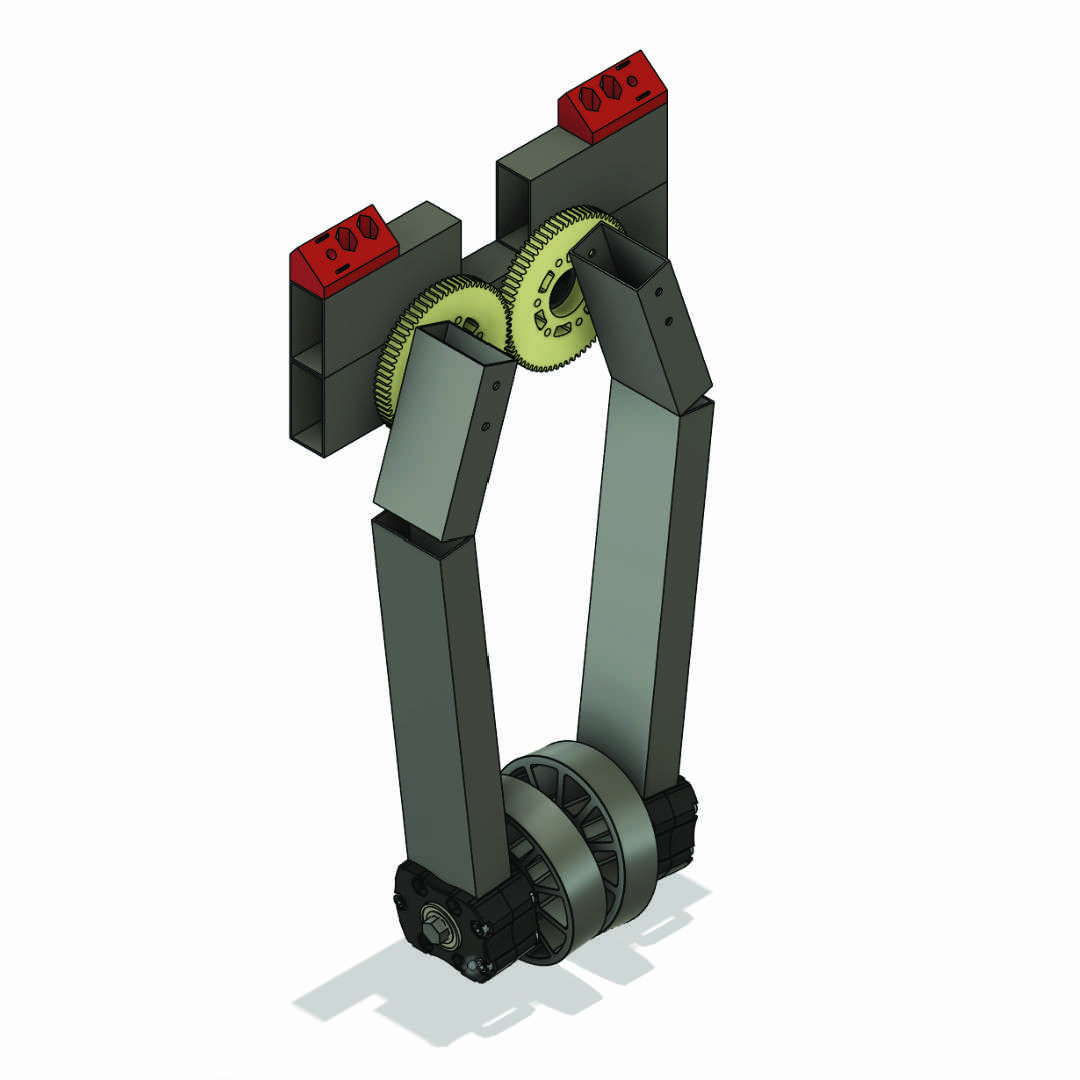
The subsystem I used to demonstrate this was the grabbing mechanism that allowed us to pick up game pieces. This mechanism was critical to the robot’s functionality, but finding the exact geometries using our usual methods was proving difficult. I sat down with members of the mechanical team and turned their ideas into a functional assembly in Fusion 360. By building it around a parameterized workflow, I was able to easily adjust the geometry to adapt to their ideas in a way that physical prototyping couldn’t match. This allowed us to accomplish in one sitting what would otherwise have taken days.
The design we developed was then used to construct the working assembly in real life, and it became the design used on our actual robot.
Another major moment for CAD progression came when many team members wanted to swap out our entire drivetrain between competitions. This was a big decision. We had about a week to retrofit our robot to work on a completely different base, and if we were going to commit to this, we had to be absolutely sure it would work.
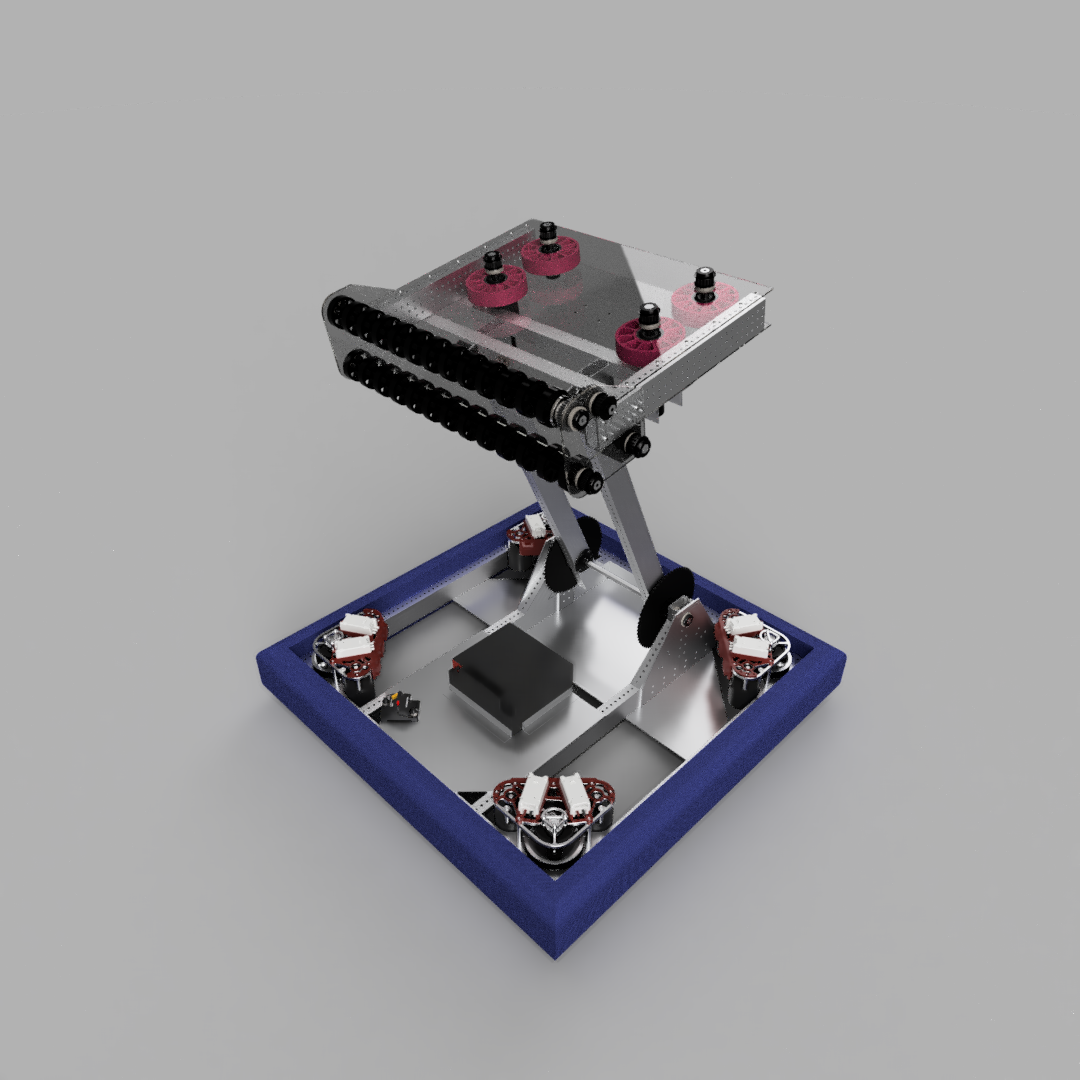
Other than the grabbing mechanism, we had already been designing a bulk of the robot in parallel with the mechanical team, mostly as practice for my subteam members. Since we had most of the critical components modeled, we were able to quickly dimension a drive base and ensure that we could retrofit the robot while still meeting all dimensional constraints. This model was rough around the edges, but it allowed us to verify that the idea was even feasible.
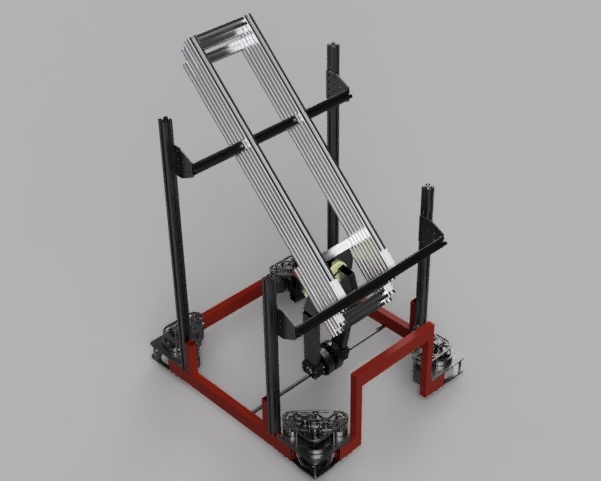
Using CAD gave us a sense of flexibility and allowed us to verify designs in a way the team had never experienced before. This season felt like the turning point when CAD became a critical part of our design process.
Senior Year
Going into my final season, I saw this as my chance to fully integrate CAD into our workflow, and I knew I had to do it in a way that someone could carry on after I graduated. For this reason, I took on more of an oversight role than in previous seasons. This year, I was elected Team Captain in addition to 3D Printing Lead. I used my position to work more closely with all the other subteams, making sure that the CAD work we did would integrate smoothly with their work and make their jobs easier where possible.
I had the CAD team working closely with mechanical subteam members, taking their brainstorming ideas and using CAD to aid in the design process. Once the team decided on a specific direction, we split the CAD team so each member could lead the design of a subassembly. They worked with mechanical members and channeled the group’s ideas into the CAD direction.
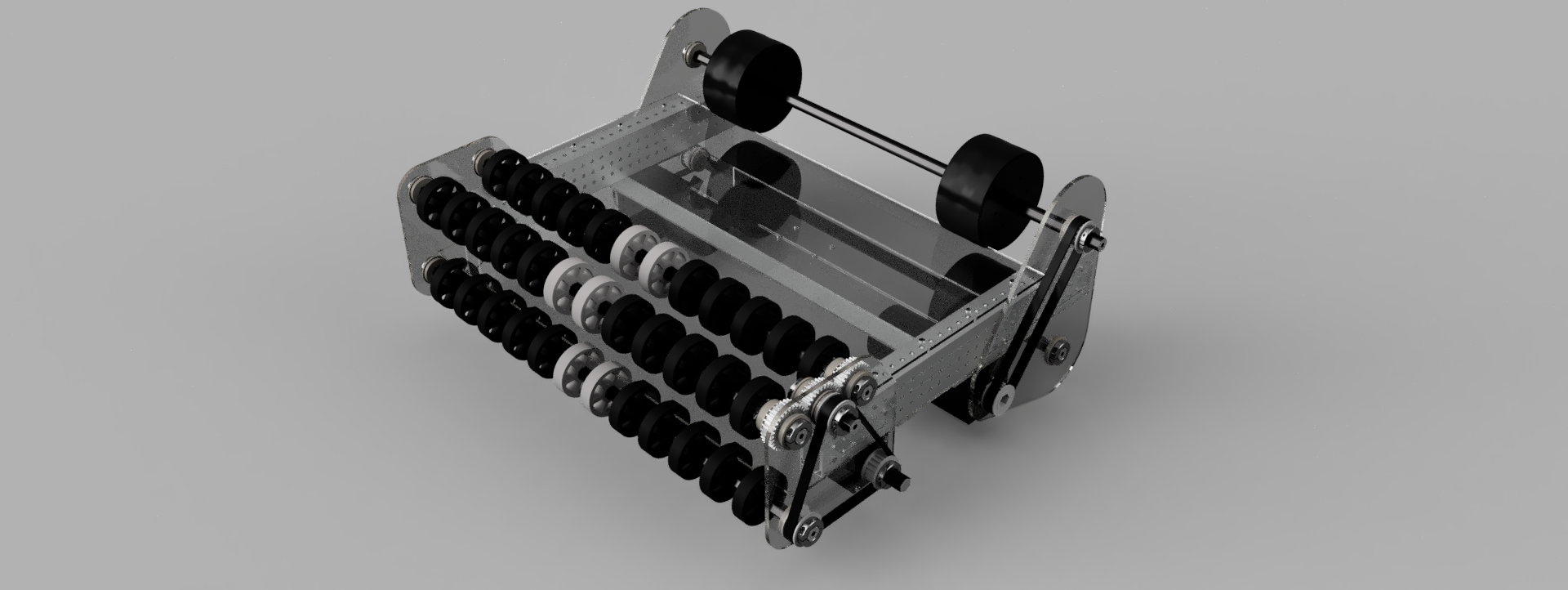
To further improve the usefulness of our digital designs, I started communication with a local engineering company that agreed to water‑jet some parts for us. This allowed us to manufacture our most critical subsystems with a level of precision that wasn’t previously possible. In testing, this machined system ran much smoother and more reliably than the one made using our traditional methods.
Our use of CAD in my senior year allowed us to be more ambitious with our design and enabled manufacturing methods that opened up new possibilities.
Lasting Impact
Our growing CAD capabilities complemented the incredible work happening across all the subteams. From barely making playoffs in my first few years to making States and then going to the World Championship my senior year, we learned how different approaches to design can greatly impact outcomes. (And I can’t take all the credit - our subteams were all extremely motivated. I feel the need to plug the vision team’s in‑house vision process, discussed at The Green Alliance.)
Since I’ve graduated, the team has obtained grants allowing them to buy two CNC routers for their machine shop. They now use CAD along with these machines to make a bulk of their framing, and from what I’m told, they’ve noticed their robots running much more reliably since this change. They went on to win a competition with one of these robots, showing that the impact of CAD design has meaningfully stuck with the team.